The Quetsche - Prunus domestica subsp. insititia

Updated: Aug 6
Origin and History of the Plum Tree
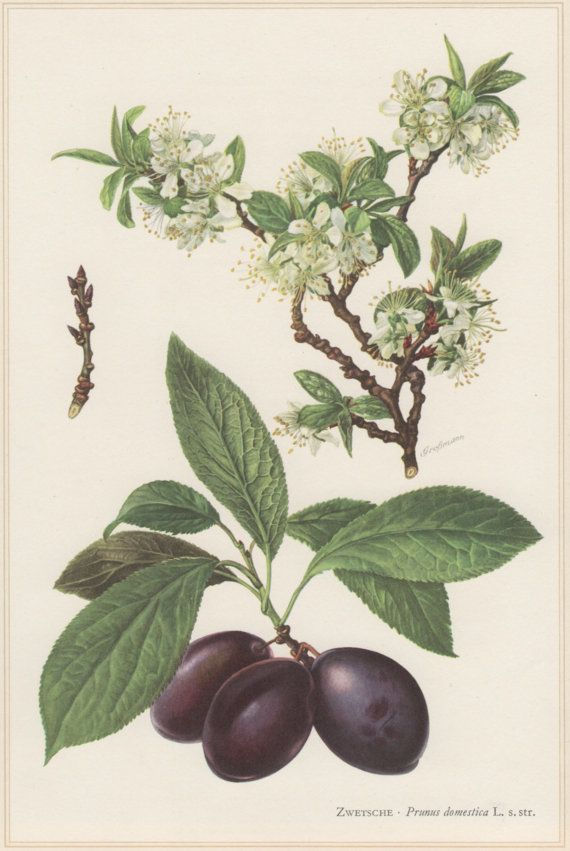
The quetsche is a type of plum—more specifically, a subcultivar of the Damascus plum (Prunus domestica subsp. insititia)—that originated in Asia Minor or near Damascus in Syria. It was brought to Europe by the Romans or the Crusaders, becoming particularly established in Alsace-Lorraine, Germany, and Switzerland as early as the Middle Ages.
Already known in France before the 19th century, its name derives from the Middle High German “Zwetschge,” echoing its origins as “damascēna,” the Damascus plum. Its purple skin, covered with a fine white bloom, and its golden-yellow flesh make it an iconic fruit of the northeastern regions.
Differences Between the Quetsche and Other Plums
Although all plums come from the Prunus domestica tree, the quetsche is distinctly different from its cousins. Unlike the mirabelle—small and round with golden-yellow skin—or the reine-claude—larger and golden-green in color—the quetsche has a distinctive oblong shape and weighs only 20 to 30 g. Its purplish-to-bluish skin, covered with a white bloom, encloses firm, juicy, yellow-green flesh that is less sweet than the mirabelle but perfect for cooking and drying thanks to its low water content.
What are the health benefits of plums?
This fruit stands out for its remarkable nutritional benefits:
Rich in dietary fiber, plums aid digestion and regulate bowel movements, providing natural relief from constipation.
Antioxidants: Their purple skin contains phenolic compounds and vitamin C, which are excellent for combating oxidative stress and cellular aging.
Vitamins: They provide vitamins A, C, E, and K, as well as essential minerals that support immunity and contribute to the body’s overall health.
These benefits are found in all varieties of quetsches, whether fresh or dried.
Recipe: Quetschentaart
Ingredients:
200 g flour
100 g butter
50 g sugar
2 eggs
300g ripe plums
250 ml milk
1 packet vanilla sugar
1 pinch of salt
Preheat the oven to 180 °C.
Knead the flour with the butter, sugar, and a pinch of salt until you have a smooth dough.
Press the dough into the prepared baking pan and form a small rim.
Arrange the pitted plums on top of the dough.
In a bowl, whisk together the eggs, milk, and vanilla sugar, then pour the mixture over the plums.
Bake the tart in the preheated oven for about 35–40 minutes, until the top is golden brown.
Let it cool completely before serving, and dust with powdered sugar if desired.


Comments