Garlic Mustard - Alliaria petiolata

Updated: Aug 4
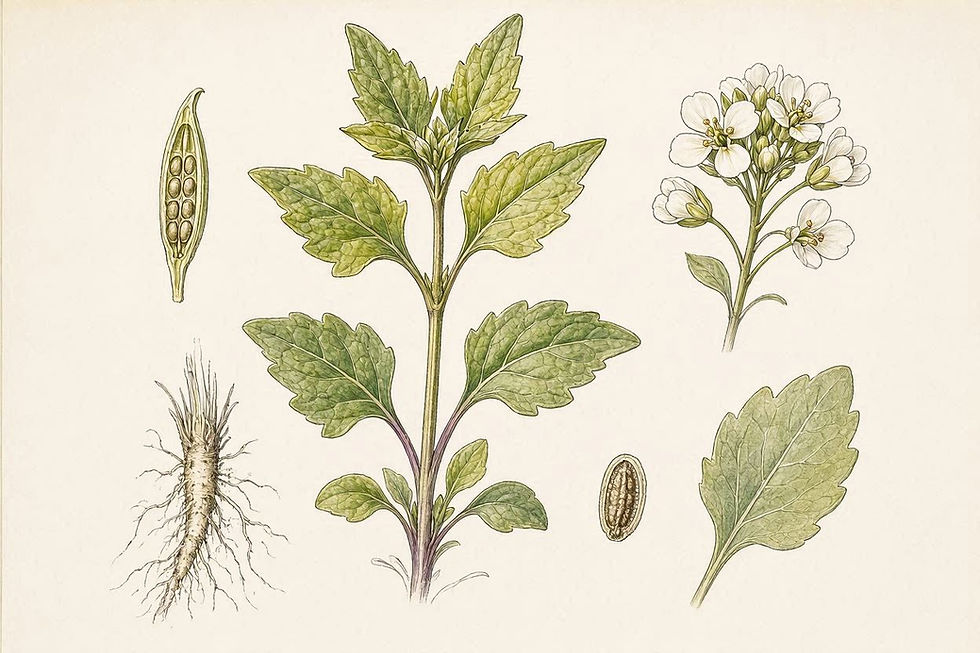
Garlic mustard belongs to the cabbage family (Brassicaceae), alongside mustard, cabbage, and horseradish. It is native to Europe and western Asia and has been used both as a food and a medicinal herb for over 2,000 years.
Herbalists recommended garlic mustard for:
chronic coughs
bronchitis
asthma
hoarseness
excess mucus
It was considered an expectorant, helping to loosen and expel phlegm.
Before citrus fruits became widely available, garlic mustard was also valued as a rich source of vitamin C.
It was eaten in spring to:
prevent scurvy
restore vitality after winter
provide fresh greens
Traditional European medicine also used it to:
stimulate urine production
"cleanse" the kidneys
support elimination of waste products
Because of its mustard oils, it was believed to:
stimulate appetite
aid digestion
reduce intestinal fermentation
Furthermore, fresh crushed leaves were sometimes applied to:
cuts
ulcers
insect bites
minor skin infections
The mustard oils and other compounds likely contributed mild antiseptic effects.
Garlic mustard is one of the oldest known European culinary herbs.
Archaeologists found its seeds in pottery dating back nearly 6,000 years, suggesting it was used long before many cultivated herbs.
Young leaves were traditionally added to:
salads
soups
herb cheeses
omelettes
sauces
The leaves have a mild garlic flavor with a peppery mustard finish.
The roots taste somewhat like horseradish.
The seeds can be used much like mustard seeds.

European herbalists generally regarded garlic mustard especially useful for people considered "cold" or "phlegmatic" according to traditional humoral medicine. Because it combines the pungency of garlic and mustard, they considered it especially effective for "driving out cold and dampness" from the body.
Recipe: Garlic Mustard Pesto
Ingredients:
75g freshly picked wild garlic mustard leaves
25g pine nuts
25g freshly grated Parmesan
50 ml extra virgin olive oil
1 clove of garlic
salt, pepper
Combine all ingredients in a bowl and blend well, gradually adding the olive oil. Transfer to a jar and top with a thin layer of olive oil.


Comments